
59th Venice Biennale
To Me You Are Beautiful
Presented during the 59th Venice Biennale in 2022, To Me, You Are Beautiful is a powerful sculptural tribute to the resilience, dignity, and inner beauty of women.
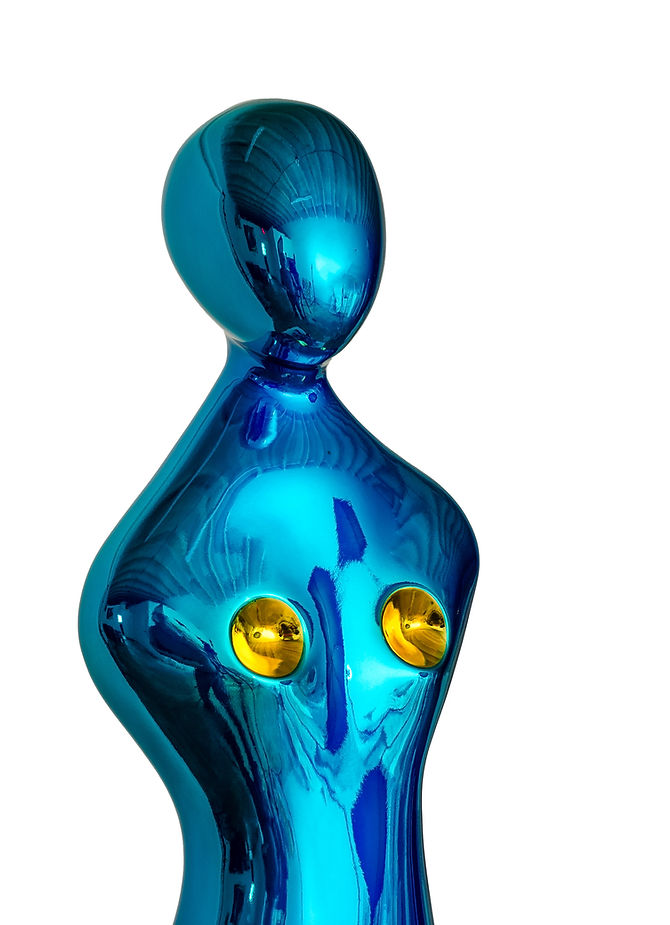
Through the figure of a woman marked by the loss of her breasts, Beatriz Gerenstein explores themes of courage, healing, and self-acceptance, challenging conventional notions of beauty. With two golden depressions replacing the breasts, the sculpture conveys a profound message: true beauty transcends physical appearance and resides in strength, grace, and the human spirit.
To Me You Are Beautiful. Aluminum. 2022. 32 x 22 x 20 inches (90 x56 x 51 cm)
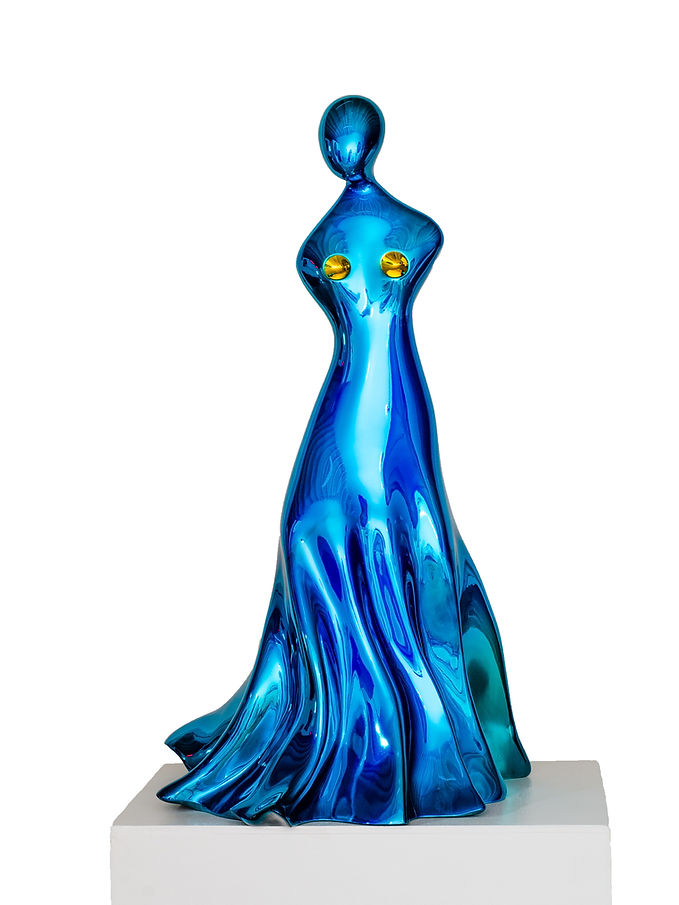


To Me, You Are Beautiful was conceived as an intimate reflection on the emotional and physical journeys experienced by countless women facing breast cancer and other life-altering challenges.
Rather than focusing on loss, the sculpture celebrates resilience, transformation, and the enduring power of self-worth. The female figure stands as a symbol of courage, embodying the strength required to confront adversity while maintaining dignity, hope, and a sense of identity.
At the heart of the work are the two golden depressions that replace the woman's breasts. Gold, traditionally associated with value, beauty, and permanence, transforms what might otherwise be perceived as absence into a symbol of empowerment. Through this gesture, Gerenstein invites viewers to reconsider conventional standards of beauty and to recognize the extraordinary strength that emerges through vulnerability and healing. The sculpture offers a message of compassion and affirmation: beauty is not defined by physical perfection, but by character, resilience, and the ability to move forward despite life's challenges.
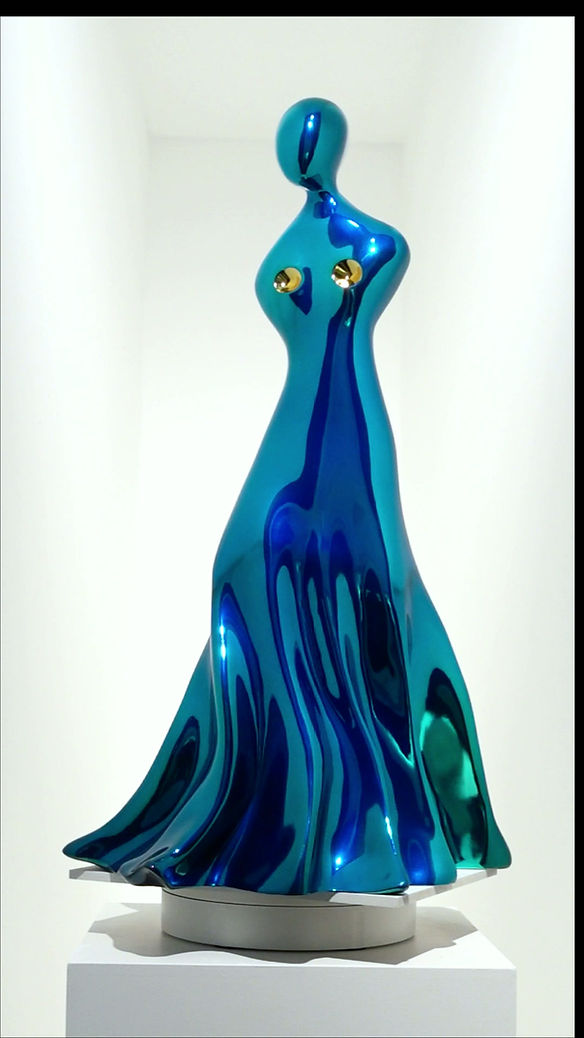
The installation was carefully designed to reinforce these ideas. Displayed in a dedicated room with white walls, floor, and ceiling, the sculpture occupied a contemplative environment free from distractions. The luminous setting heightened the presence of the work and emphasized its symbolic details, while abundant lighting enhanced its uplifting and hopeful character.
Positioned on a rotating pedestal, the sculpture could be viewed from every angle, encouraging visitors to engage with it physically and emotionally. As the figure slowly revealed itself in the space, viewers were invited into a deeper reflection on beauty, identity, acceptance, and the universal human capacity for resilience.