
Museum "La Quadreria"
Bologna, Italy
Beatriz Gerenstein's solo exhibition at La Quadreria Museum in Bologna, Italy, presented a unique dialogue between contemporary sculpture and Old Master paintings. Held from January 21 to February 4, 2020, within the historic Palazzo Rossi Poggi Marsili, the exhibition explored the continuity of artistic expression across centuries.
Through a carefully curated selection of nine sculptures installed among works by Italian masters of the sixteenth to eighteenth centuries, Gerenstein invited visitors to reflect on the timeless nature of beauty, emotion, and the human experience.
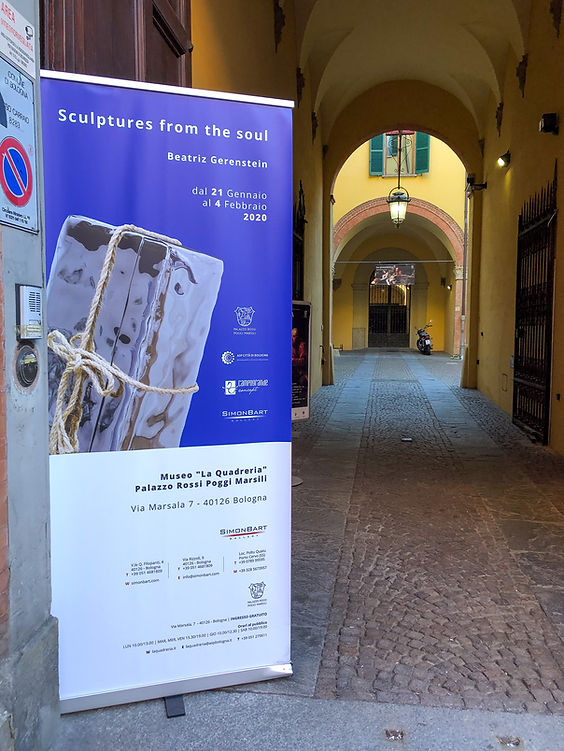

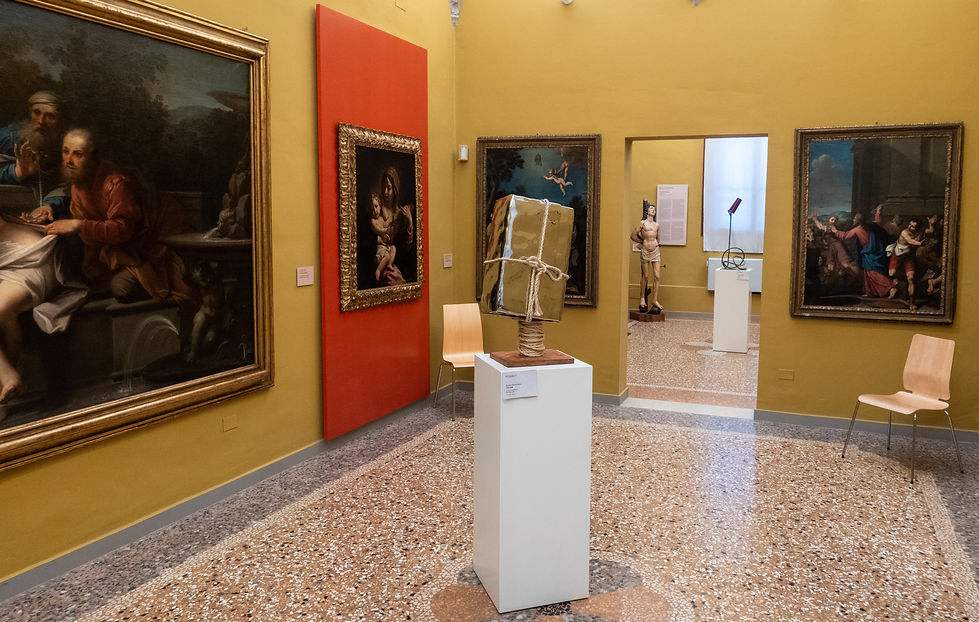


The exhibition was conceived as an exploration of the relationship between artistic traditions separated by centuries yet united by a common pursuit: the expression of human values, emotions, and ideals through visual form. By placing Beatriz Gerenstein's contemporary sculptures within the galleries of La Quadreria, a museum dedicated to Italian masterpieces from the sixteenth to eighteenth centuries, the exhibition created a powerful dialogue between past and present.
The curatorial concept emphasized both contrast and continuity. Gerenstein's organic and contemporary sculptural language stood in deliberate tension with the classical paintings surrounding it, generating unexpected visual and conceptual encounters. At the same time, the exhibition revealed how the fundamental principles of art—harmony, balance, symbolism, beauty, and emotional resonance—transcend historical periods, evolving in form while preserving their essential human significance.
The exhibition occupied seven of the museum's galleries. Nine sculptures were carefully selected and positioned in relation to the character and atmosphere of each room. Six works were individually installed at the center of separate exhibition halls, allowing visitors to experience a direct dialogue between each sculpture and the surrounding paintings. Three additional sculptures, united by a shared thematic message, were presented together in a dedicated gallery. Particular attention was given to establishing visual and conceptual connections between the sculptures and the artworks already present in each space.
To enhance the experience, the galleries were subtly darkened and each sculpture was illuminated with focused lighting, creating moments of contemplation and emphasizing the sculptural forms within the historic interiors. Set against the backdrop of the elegant Palazzo Rossi Poggi Marsili, the exhibition invited visitors to consider how artistic languages change through time while remaining connected by a continuous search for meaning, beauty, and human understanding.